Three automations that stopped sales deals slipping through the cracks at a SaaS company
Salespeople get a reminder when an opportunity goes quiet, new leads are enriched automatically, and meeting notes are created without retyping.
4 min read
- Client
- B2B SaaS company
- Industry
- SaaS / Sales / Automation
- Scope
- AI sales agents & lead generation
- Delivery time
- 10 days
Who the client was and what was getting in the way
The client is a B2B SaaS company with a growing sales team. It had grown to the point where habits that worked with three salespeople no longer did. There were three problems, and each cost real money.
First, sales opportunities went quiet and no one noticed. If nothing happened on a deal for several days, it simply slipped from the salesperson’s mind. The prospect lost interest and chose someone who got in touch. Second, new leads arrived in the system almost empty — an email address and company name, nothing more. Before every first call, the salesperson had to search the web by hand to work out what the company actually did. Third, there were meeting notes. After every product demo, it took fifteen to twenty minutes to write up what had happened, and the customer’s most important objections still got lost.
Management also lacked visibility. The team lead did not know which opportunities were promising and which had stalled. Each salesperson was losing five to seven hours a week to tasks that no one needed to do manually. The client’s requirement was clear: solve this without expanding the team.
What we built
We built a package of three automations in n8n, all connected to HubSpot so the data would stay in one place.
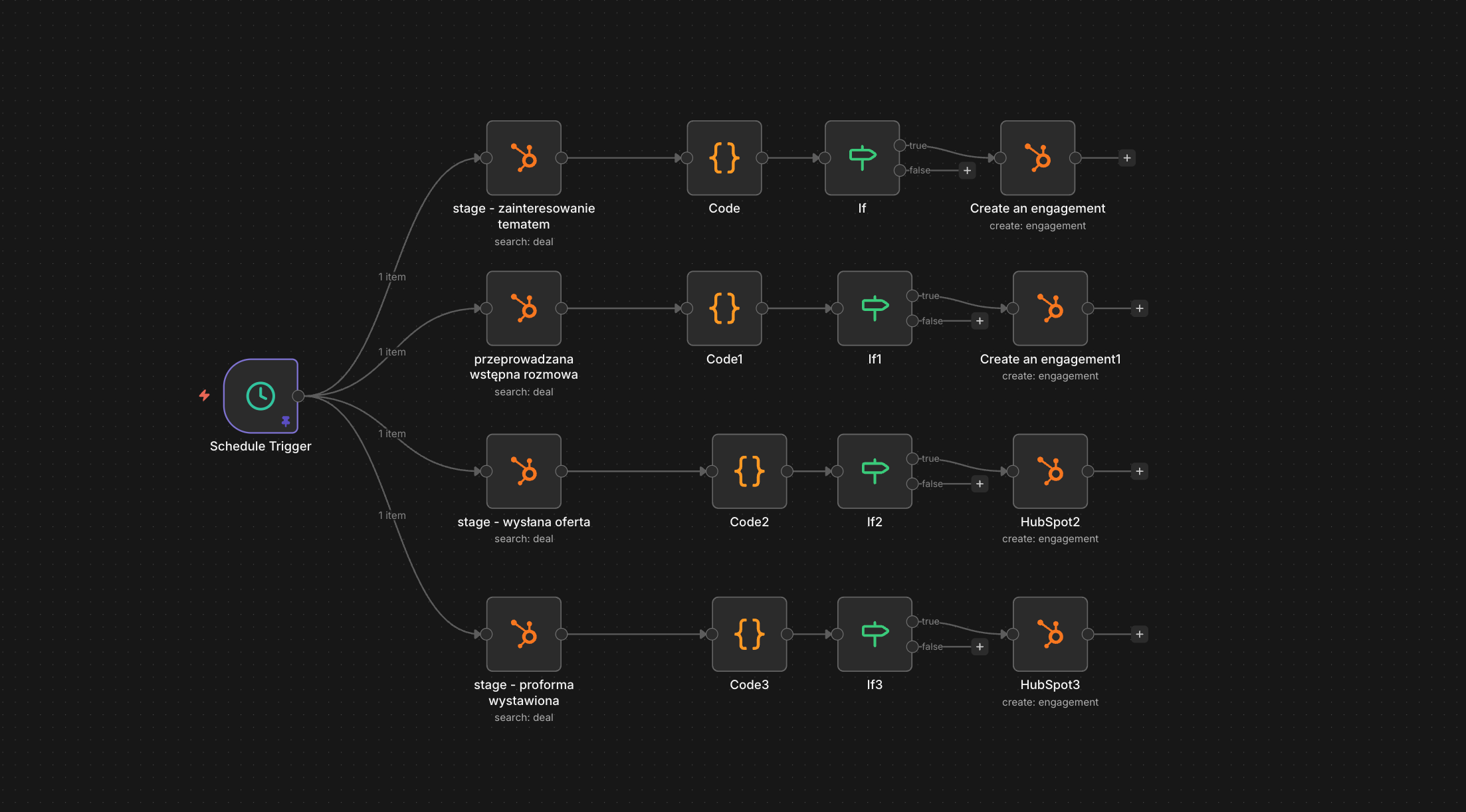
The first reviews open sales opportunities every day and checks when there was last activity — an email, call, or task. If there has been no activity for three days, it automatically creates a task for the owner to follow up. It is a simple change, but it addresses the costliest problem of the three.
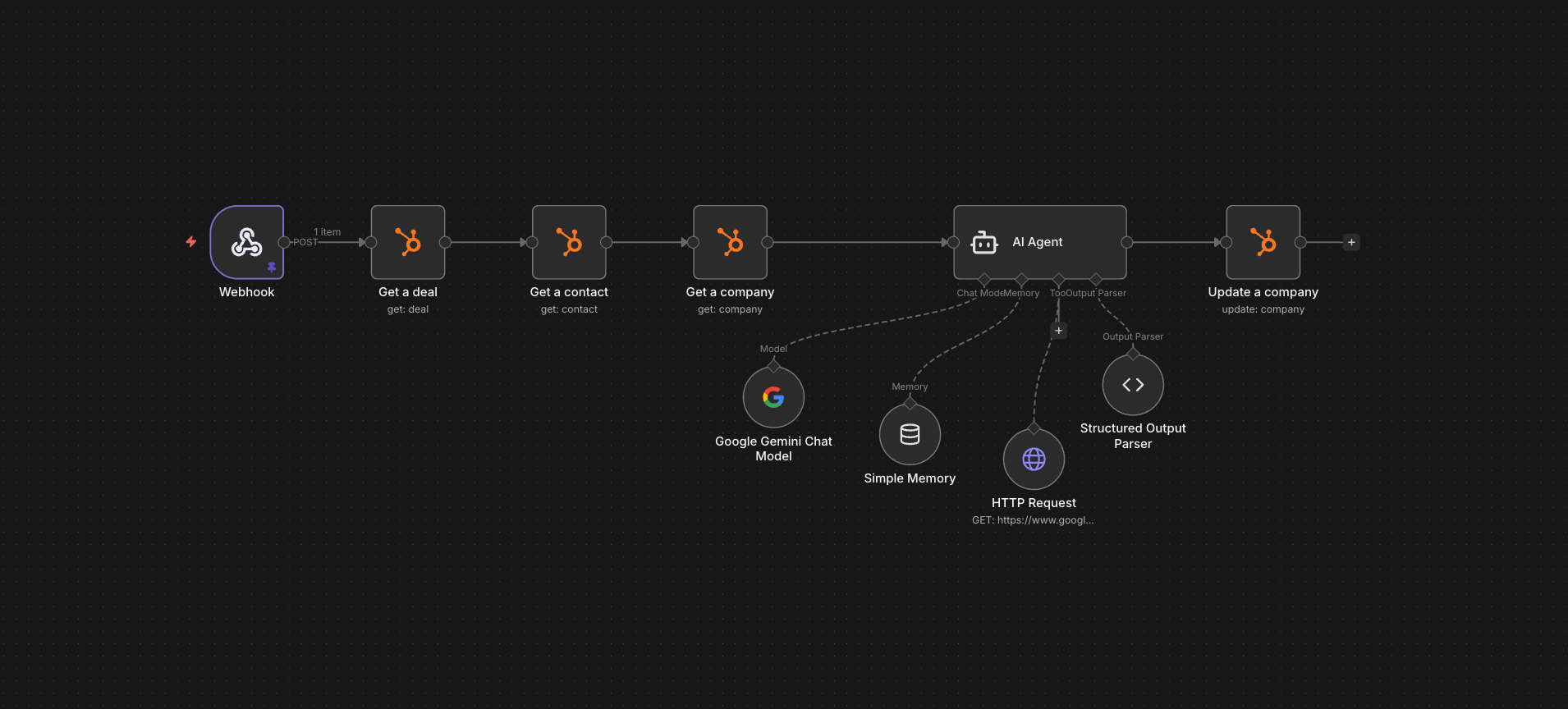
The second starts when a new lead comes in. A HubSpot event triggers the automation, which retrieves public information about the company from the web. Google Gemini extracts the industry, company size, technologies in use, and social channels. The enriched profile goes back to HubSpot before the salesperson even opens the contact record.
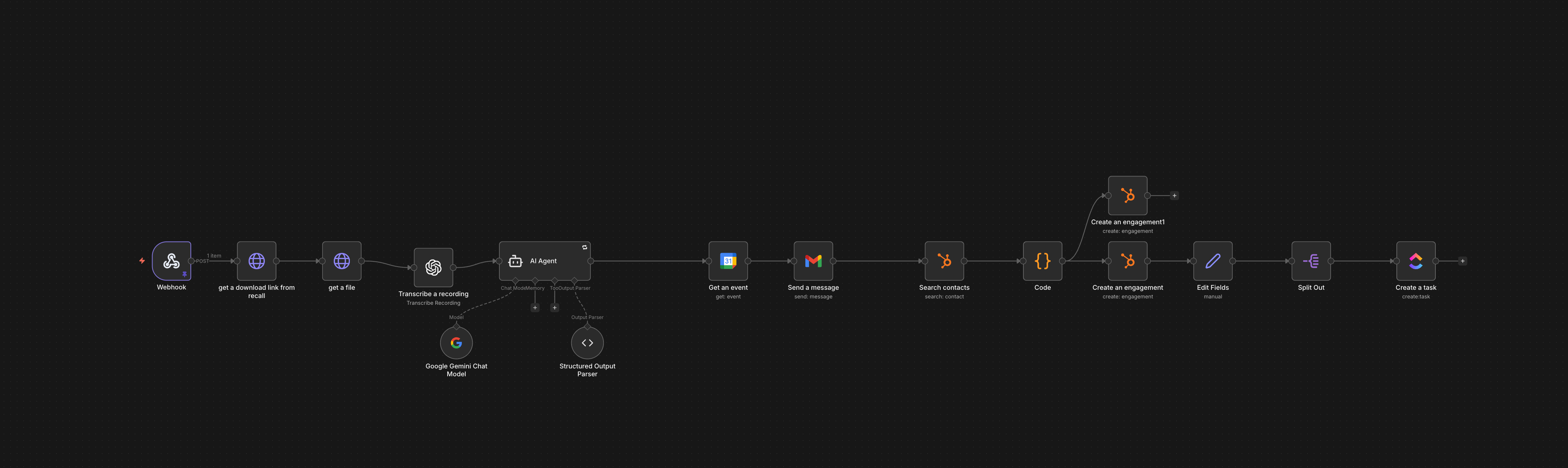
The third is a meeting bot. It joins scheduled video calls from the calendar, records them, transcribes the recording, and prepares a summary with the customer’s problems and next steps. The summary is emailed to the salesperson and saved as a note in the system.
How it works today
In the morning, a salesperson sees a task list that includes reminders about opportunities they might not have thought of themselves. New leads are already enriched when opened. After a meeting, a finished summary arrives in the inbox, so the salesperson can move straight on to the next conversation. All three automations write data to the same place, so the team continues working in one system rather than three separate tools.
The whole solution took ten days. Two days went into mapping processes and designing workflows. The next three were spent building opportunity monitoring and lead enrichment. The following three went into the meeting bot, which was the most difficult part. The final two covered connecting everything to HubSpot, testing, and training the team.
The outcome
The client got three working automations: monitoring activity on sales opportunities, enriching leads using Google Gemini and web research, and a bot that records meetings. Follow-up tasks are created automatically, without human involvement. Notes, transcripts, and summaries are generated for every conversation, not only the ones where a salesperson has time to write them up.
The team did not grow, and routine work disappeared from its calendar.
What we would do differently
Three automations at once was too broad a scope for one implementation. The first two were ready and tested quickly, but the meeting bot held up the whole project because getting transcription quality right and reliably joining calls takes time. Next time, we will split the work into two phases and deliver value to the client sooner.
The second issue we treated too lightly was consent to recording. The bot joins meetings with people outside the company, so how they are informed about recording must be agreed with the client at the start, not during testing. The third lesson concerns lead enrichment: sometimes the model filled in fields with plausible-sounding information that was not supported directly by the source. We added confidence labels and leave the field blank rather than guess, but that should have been part of the design from day one.
Related projects
How a consulting firm got a weekly list of companies showing fresh buying signals
Instead of manually checking the press and public registers, the sales team starts Monday with a ready-made list of companies, each lead scored and assigned an owner.
A database of German HVAC installers built from scratch for export sales
More than 580 verified German B2B companies, delivered in batches within a few days, with email addresses, registry details, and a fit score.



